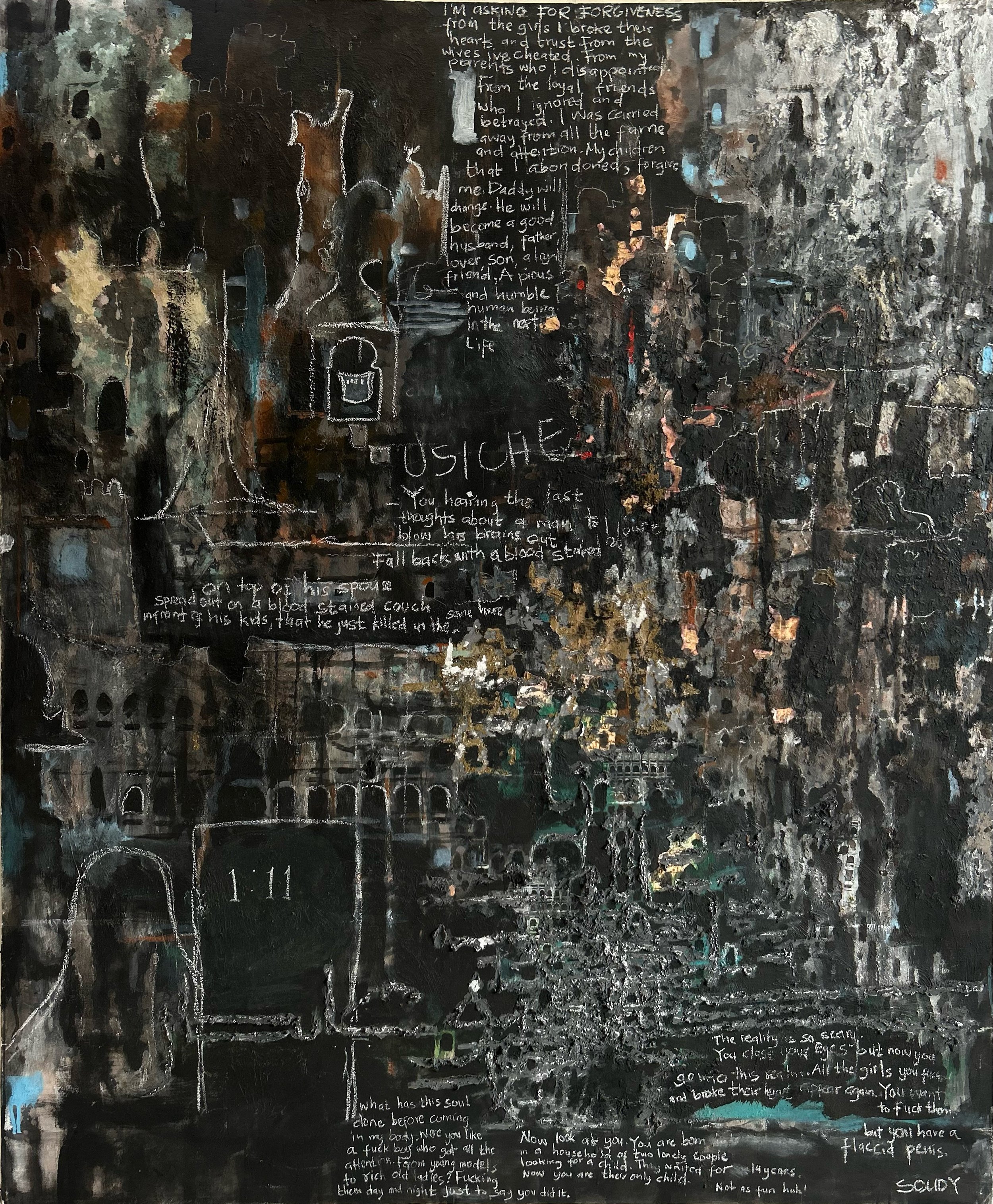
You grew up in Lamu. How did the island first spark your interest in art?
There was a gallery I used to pass every day on the walk home from school. Inside, behind the glass, was a painting of an old man. Kids weren’t allowed in, so I’d just stand there and look, honestly most days. After a few years, my madrasa hosted an Arabic calligraphy competition. My drawing won and was hung inside Lamu Fort, a place I’d only seen from outside. That was the first time I felt like I belonged in those spaces.
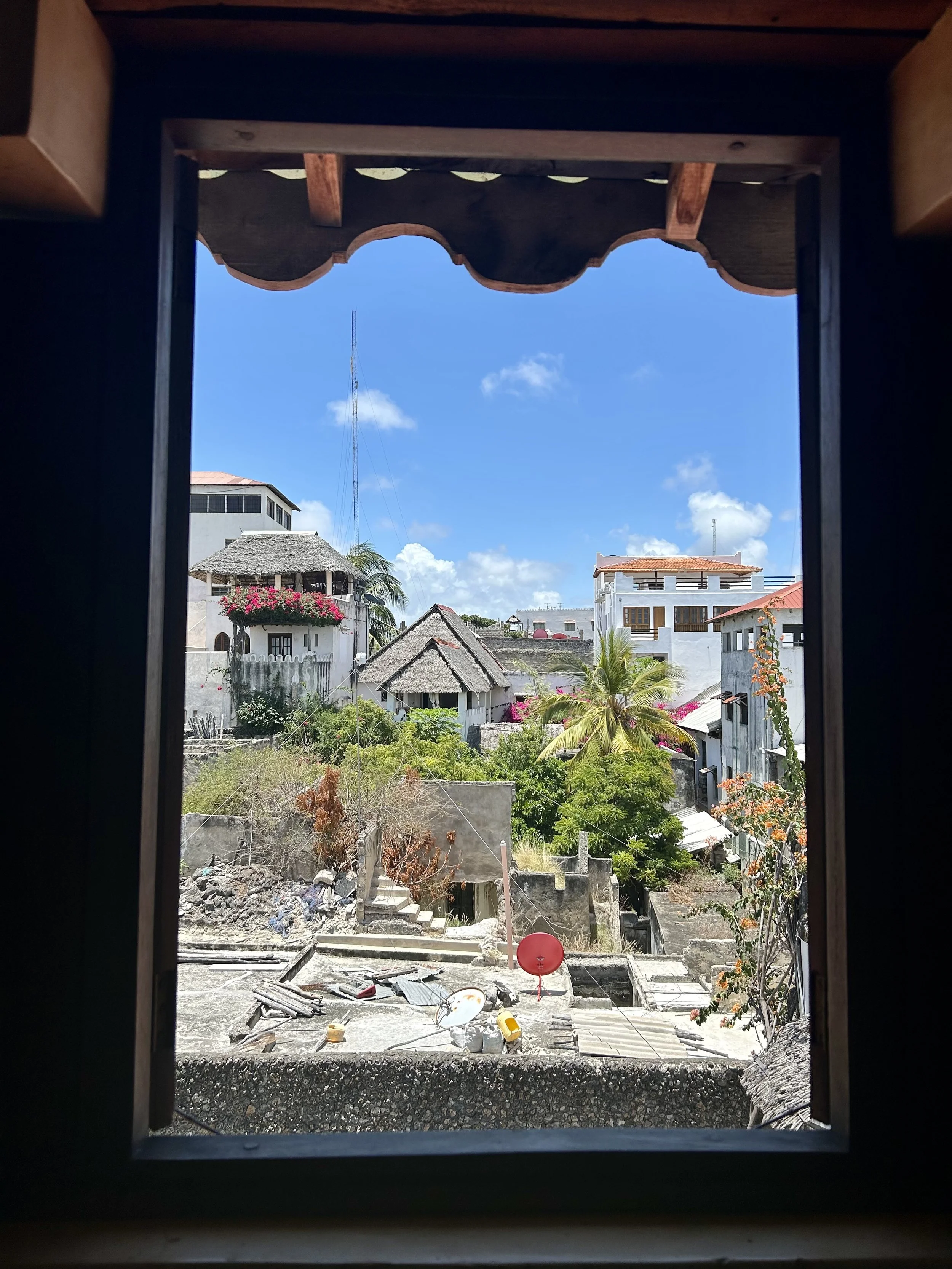
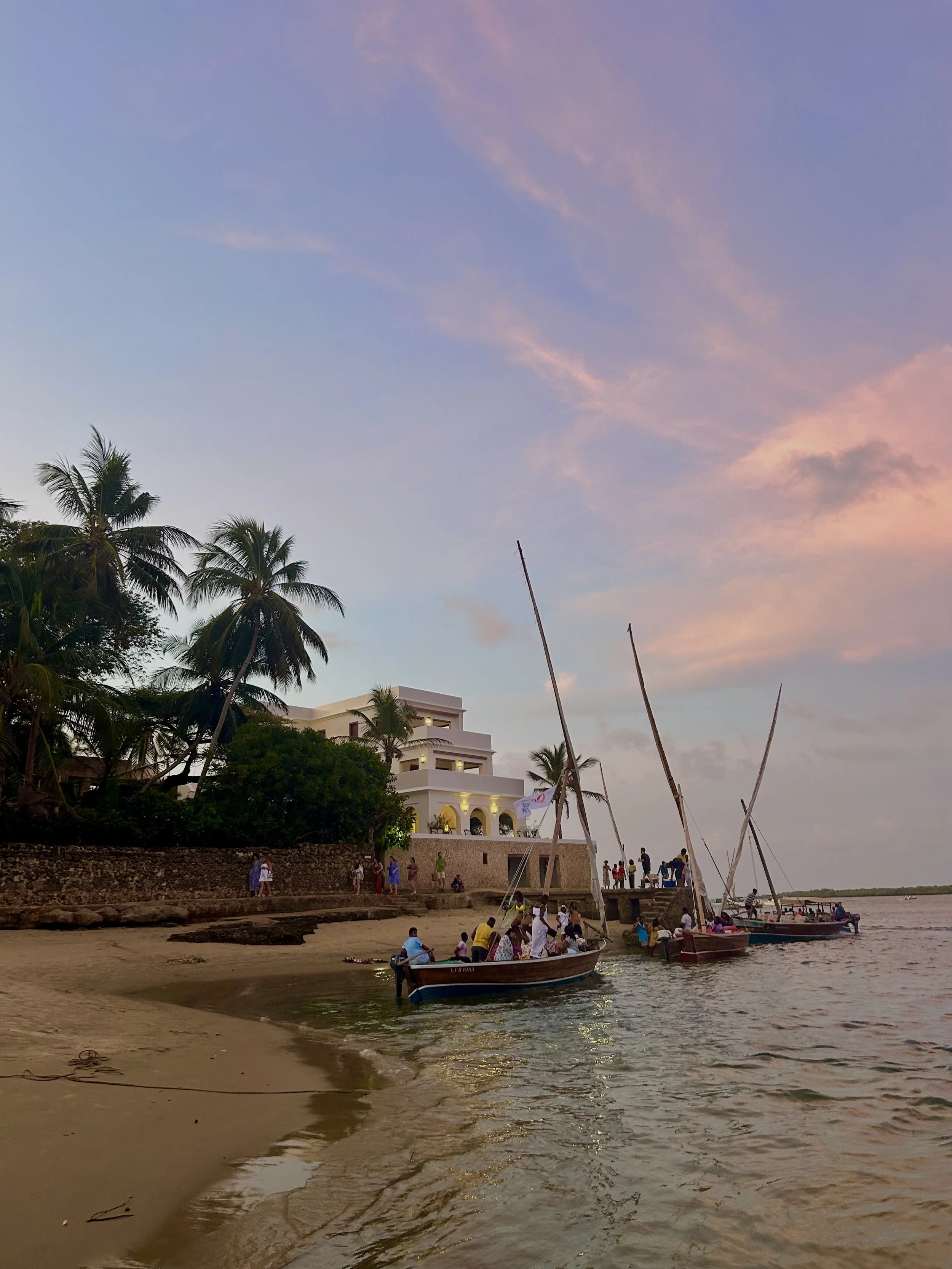
What’s it like being an artist in a place like Lamu?
It’s not easy, but that’s what makes it interesting. Lamu’s culture is rigid, it’s an island physically and culturally. There are expectations about what’s appropriate, even about how you look. People tell me to cut my dreadlocks and expect hyperrealism in art. I don’t paint like that. But I think limits make art better, and rigidity provides a creative advantage. If everything was accepted, art would be boring. I like having something to rebel against, it’s those boundaries that give the work energy.
“If everything was accepted, art would be boring.”
Did leaving Lamu change the way you see it?
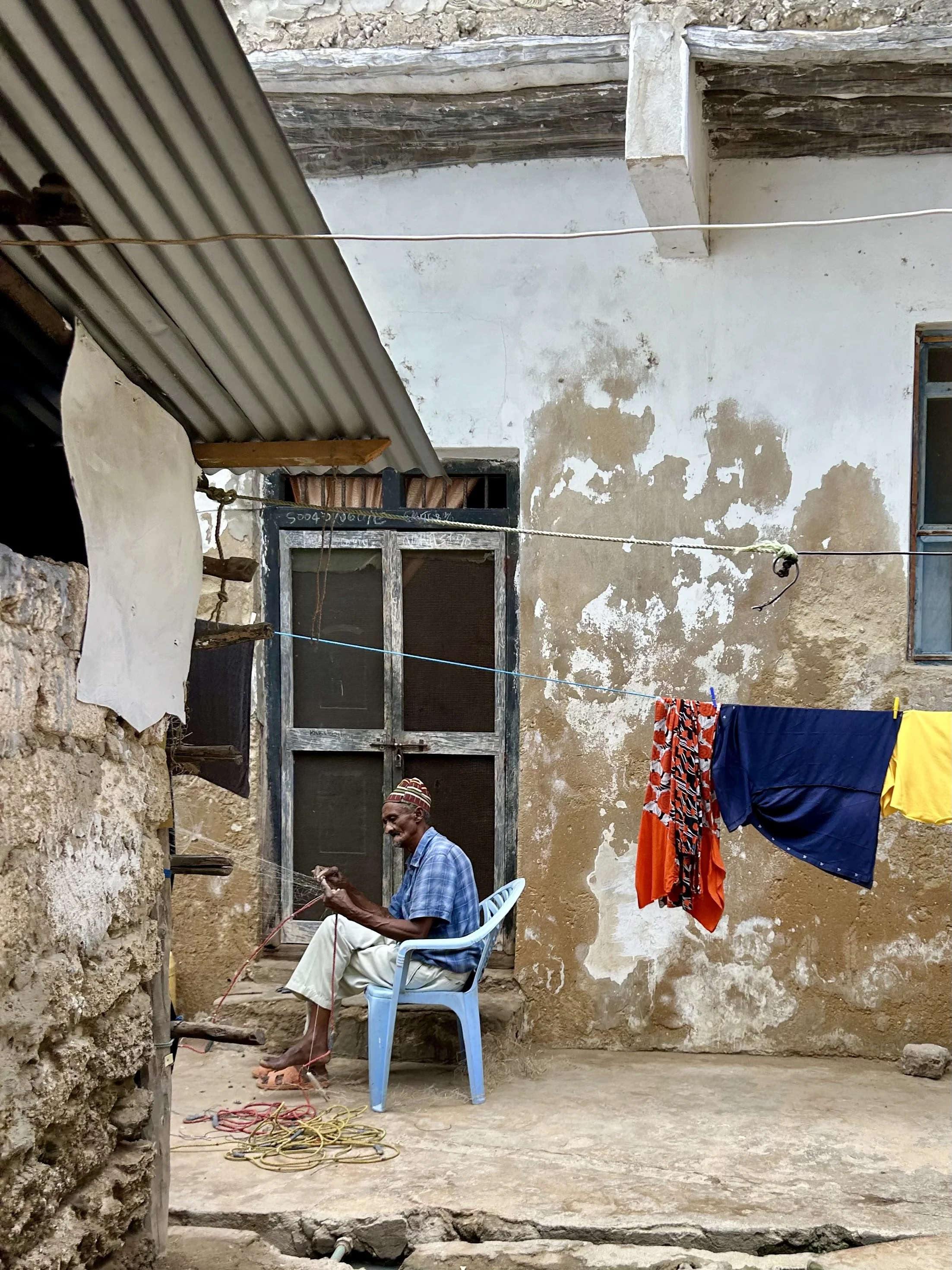
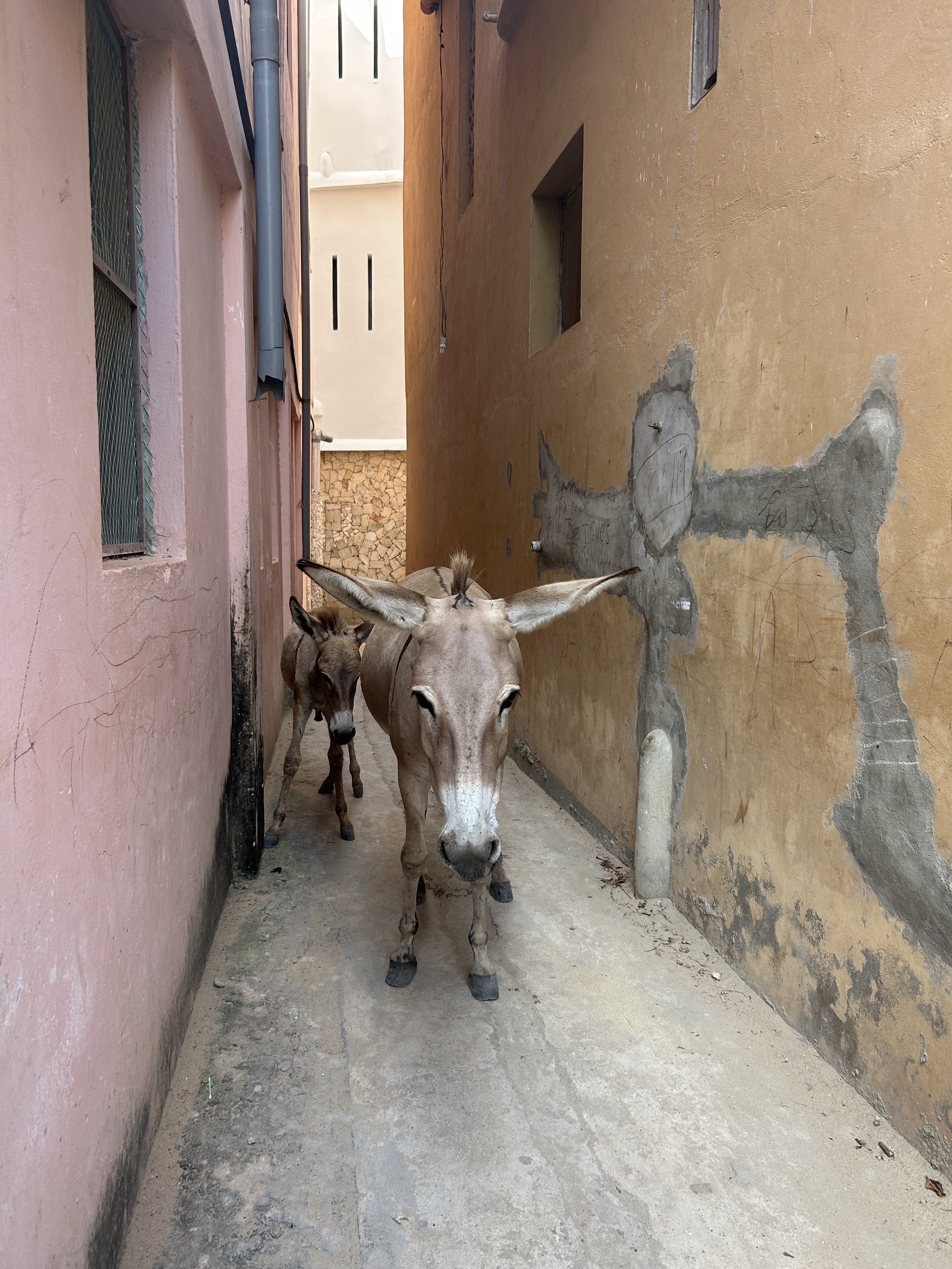
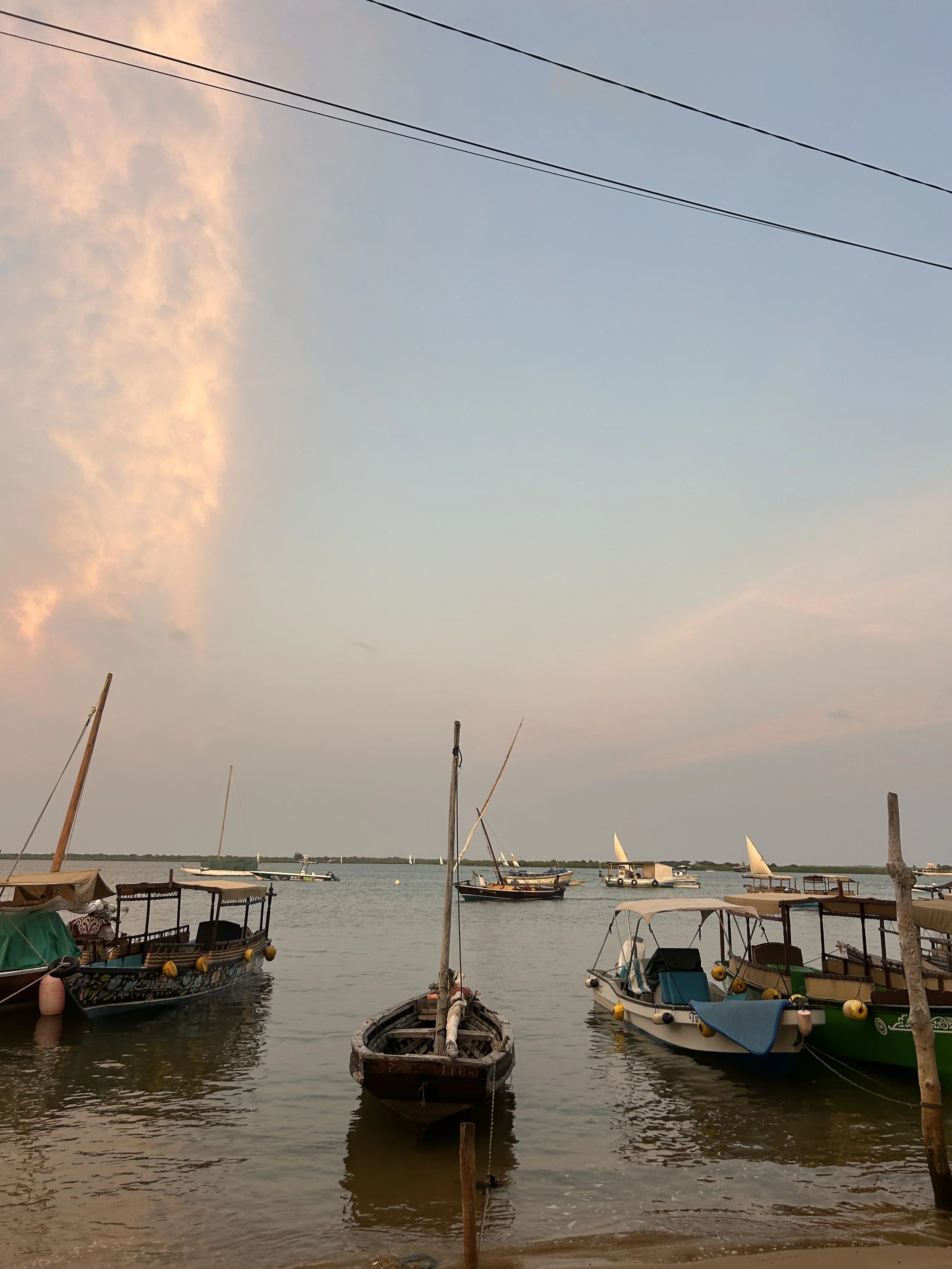
Completely! I studied in Nairobi, and it was only by leaving that I began to notice Lamu differently, and pay attention to its texture, its small, intimate details. When I got back I’d walk the old town and run my fingers along the carved stone, tracing the cracks. Now I see the islands stories everywhere, most of all in the old men, sitting in doorways with coffee. They find their way into my work all the time.
Do you ever feel tension between honouring Lamu’s traditions and pushing into something new?
Yes. I know a graffiti artist here who always wants to paint the walls, and I get it, but I also resist it. If you haven’t left Lamu, maybe you don’t see how special it is, and the instinct is to change everything. But once you leave and come back, you understand why it’s worth preserving. It’s easy to see tradition as a cage to break free from. I see it more as scaffolding, the inherent bones and body to dangle art from and weave new mediums into. The skeleton stays the same, but the body, its gestures and posturing, shifts and grows with the art.
“I see tradition more as scaffolding, the bones and body to dangle art from.”
What are the biggest threats to Lamu’s creative or cultural future?
Phones. Distraction. People losing touch with the depth of the culture. But it’s hard to kill something that strong, the culture here is deeply embedded in daily life, it’s not going anywhere.
As Lamu becomes more visible globally, how do you think about authenticity?
For me, authenticity is about uniqueness. It’s a feeling you can’t fake. Some people want to romanticise Lamu, but it’s more complex than that. Of course it’s beautiful, but it’s also full of contradictions and lineages of hardships and secrets. That’s what makes it worth exploring to me as an artist.